Saturday, 10 February 2018

goofydawg

for his big hit because I am not sure love these guitars

Wow… That’s usually first – and only – thing I can say when having a visceral reaction to an experience. And a visceral experience was exactly what happened when I finally got my guitar set up for last night’s gig. After I played the first song, I had to pause for several seconds soaking in

legally buy a top quality marijuana seeds


from Will Guitar and Weed Feed http://ift.tt/2nRluBV
via IFTTT

Trump's Afghanistan "Taliban Heroin Lab" Bombing Campaign is Just More Drug War Theater [FEATURE]

for his big hit because I am not sure love these guitars

On the night of November 19, small-time Afghan opium trader Hajii Habibullah finished his day's business at the local opium bazaar in Musa Qala, in Helmand province, and headed home to his family. He never saw the sunrise.

[image:1 align:left caption:true]Helmand province is a poppy-growing powerhouse that for years has been hotly contested terrain in the battle between Taliban insurgents and the Afghan government and NATO forces. Under new authority from the Trump White House allowing the US military to "attack the enemy across the breadth and the depth of the battle space, and also functionally, to attack their financial networks, their revenue streams," US and Afghan warplanes mounted bombing raids on "Taliban drug labs," targeting three districts in Helmand. That night, Musa Qala was target one in a dramatic escalation in US Afghanistan policy.

In a press briefing two days later, Gen. John Nicholson, commander of US forces in Afghanistan guided reporters through videos documenting the attacks, with bomb blasts destroying small structures as the general narrated strikes by US B-52s and F-22 Raptors. The raid in Musa Qala destroyed "millions" in "opium cooking at the time of the strike," repeatedly emphasizing how careful the raids were to minimize "collateral" casualties.

But the first bombs to fall on Musa Qala didn't fall on a "Taliban narcotics production facility." They fell on Hajii Habibullah's house, killing him, his wife, his seven-year-old daughter, four sons aged between three and eight, as well as a visiting adult daughter and her year-old daughter. Only the son-in-law sleeping in a guest house on the property survived.

That's according to on-the-scene field research contained in a report released last month by the London School of Economics International Drug Policy Unit. The analysis, written by Dr. David Mansfield, who has been conducting research on rural economies and poppy cultivation in Afghanistan for the past two decades, is sharply critical of the Trump administration's aggressive new turn. Mansfield isn't the only one sounding alarms. Warnings that the policy is expensive and unlikely to achieve its objectives while having serious negative consequences are coming from other academic analysts, too, and even from the watchdog agency charged with overseeing the US Afghan war.

Last month, in a Pentagon briefing, spokesmen claimed the campaign of airstrikes, which have continued after that first attack in November, was crippling the Taliban's ability to fund itself though the drug trade. Defense officials claimed the raids had destroyed $80 million worth of heroin, resulting in a $16 million loss for the Taliban, who make money taxing the trade.

But Mansfield demolishes that claim:

"At current prices for heroin, the losses USFOR-A refer to would amount to almost 73 metric tons of heroin, that's nearly 3 metric tons of heroin in each lab destroyed," he wrote.

With a conversion rate of between 9 and 13.5 kilograms of fresh opium per kilogram of heroin, this would require between 27,000 and 40,500 kilograms of fresh opium per lab. It would mean that the 25 labs destroyed were responsible for converting between 8 to 11 percent of the entire 2017 crop of 9,000 metric tons. There is little evidence from the nine buildings destroyed [in Musa Qala] to support such a claim.

Going on the tax rates levied on the [Musa Qala] labs, were the aerial campaign to have actually destroyed 73 metric tons of heroin, the loss in revenue to the Taliban would have been around $1.2 million, considerably less than the amount reported by USFOR-A.

Were the air attacks to have destroyed a series of houses rented out to cook opium in much smaller batches, as the case would appear to be in [Musa Qala], the loss in revenue to the Taliban would have been negligible. In fact, the 50 barrels of opium cooking at the time of the strike that [USFOR-A commander] General [John] Nicholson referred to as being worth 'millions of dollars' would have been worth at most $190,750 if converted to heroin and no more than $2,863 to the Taliban.

[image:2 align:right]Brookings Institute senior fellow in the Center for 21st Century Security and Intelligence Vanda Felbab-Brown, an expert on international and internal security threats and nontraditional security threats, including insurgency, illicit economies, and organized crime who has done fieldwork and research in Afghanistan, was also skeptical.

"The Pentagon has made various claims about the size of the impact on Taliban finances, but that is all highly speculative," said Felbab-Brown. "The logic is that a certain amount of heroin is destroyed per target and that heroin is assigned that same value per unit price, but we can't assume that. It could be there was no processed heroin there at all, only opium. The only value might be that it eliminated one Taliban financier who happened to present, or maybe disrupted one link in the trade, but we can't even assume that."

"By and large, the campaign will not make a significant dent in Taliban financing," argued Felbab-Brown. "They will have to be extremely lucky to destroy large portions of opium stockpiles that have been growing for years. And the Taliban has different local arrangements -- sometimes they tax the labs, sometimes they're further downstream -- so I don't expect any significant financial losses for them."

In its latest quarterly report, issued January 31, the Special Inspector General for Afghanistan Reconstruction (SIGAR), a government watchdog agency, also took issue with the military's claims about the damage it was inflicting on Taliban finances -- and questioned the cost-effectiveness of the campaign.

In a special section on the drug lab bombing campaign, SIGAR says that the methodology the military uses to assess the value of the labs it destroys leaves it "unclear whether the DOD figure is an accurate estimate of how much revenue is eliminated by air strikes on drug labs."

What is known, SIGAR reports, is how much it costs to fly the planes dropping the bombs:

According to the latest DOD financial management report, an F-22 costs between $35,294 and $36,799 per hour to operate; a B-52 between $32,569 and $34,341 per hour; and an F/A-18 between $9,798 and $16,173 per hour, depending on the model. By contrast, the labs being destroyed are cheap and easy to replace. Afghans told Reuters it would take three or four days to replace a lab in Afghanistan. According to UNODC, the morphine/heroin labs need only simple equipment such as a stove, iron barrel, and locally made pressing machines.

SIGAR was also cognizant of the potential political risks involved in dropping bombs in the middle of settlements: "One danger of a sustained air campaign is civilian casualties, which could erode support for the Afghan government and potentially increase support for the insurgency," the report noted.

That was the case in Musa Qala, where Mansfield noted that Helmand members of parliament had voiced objections and where a local informant angrily declared: "These are not Taliban. They killed women and children, NATO killed them."

In rural Afghanistan, where opium is the backbone of the economy, it isn't just the Taliban involved. It's peasant farmers and field-workers, traders and middlemen, local officials and warlords. And that makes using military force to attack what is essentially a criminal problem especially problematic.

"That's one of the challenges of the campaign," said Felbab-Brown. "The military can go after 'Taliban-linked' targets, but what does that mean? In some cases the lab might belong to a trader, a local criminal actor, but in other cases, it will be operated by peasants. The tendency in the drug markets is to move away from very large labs and have many dispersed labs precisely to prevent significant disruption. These are mainly small labs operated by low-level peasants who have acquired the skills to do the processing," she added.

"There is a very significant risk of hitting a lot of very low-level people, while those with political connections get away with it," the Brookings scholar pointed out. "The risk is of pushing people into the hands of the Taliban and making them more dependent on the Taliban."

The Trump White House is pressing the "Taliban heroin lab" bombing campaign because things aren't going so well in Afghanistan, in terms of either counternarcotics or counterinsurgency. Nearly 17 years after the US first invaded to drive the Taliban from power, the insurgency is stronger than ever, with the Taliban reportedly controlling more than a third of the population, rising civilian and military death tolls, and a US-backed government in Kabul seemingly incapable of either fighting or governing effectively.

"Afghan government control or influence has declined and insurgent control or influence has increased overall since SIGAR began reporting control data in January 2016," the watchdog said in its report, while also noting that for the first time, the Pentagon prohibited it from publicizing the full district and land area under the control of the government and insurgent groups or reporting on the strength and capabilities of the Afghan National Defense and Security Forces.

Similarly, the war on drugs in Afghanistan isn't exactly being won, either. Since 2002, SIGAR reported, the US has spent $8.7 billion on counternarcotics efforts in the country, only to see it remain responsible for the great bulk of the world's opium production throughout the period. Last fall, just before the bombs began falling on the labs, the UN Office on Drugs and Crime reported in its Afghanistan Opium Survey 2017 that opium planting was at an all-time high, up 63% over 2016, with strong increases reported in almost all poppy-planting provinces.

For the Trump administration, going after opium and the Taliban seems like a natural, and going aggressive fits with Trump's militaristic bent, but all the sound and fury is unlikely to accomplish much.

"There is action for the sake of action because the White House and Sessions want to see action," said Felbab-Brown. "There is this domestic image being created about opiates, and various government officials and Republicans have been obliquely linking the US opiate epidemic to global markets, but there is no evidence whatsoever that the US market is in any significant way supplied by Afghanistan. Still, the Pentagon had to demonstrate that it was doing something, and the thing it can do most easily is bomb interdiction sites, those so-called heroin labs."

Although the county accounts for around 90% of the global opium supply, very little Afghan opium ends up as heroin consumed by American drug users. According to the DEA's annual 2016 National Drug Threat Assessment, only about 1% of heroin in the US comes from Afghanistan. Instead, Mexico accounts for 80% and Colombia and Guatemala make up the remainder.

[image:3 align:left caption:true]"There is far more pressure from Trump on actors in Afghanistan to demonstrate results and far less comprehension that demonstrating results for its own sake with significant negative side effects is counterproductive," said Felbab-Brown. "Obama had much more comprehension of the risks of things like eradication, and Trump is more far more determined to revive doctrinaire old counternarcotics approaches, many of which harken back to the drug dogma of the 1980s and 1990s."

But trying to suppress the Afghan opium economy is a loser's game for the foreseeable future, she argued.

"There are real limits on what interdiction or eradication can do. There is much greater insecurity than at any point since 2002-2003, there are fewer US troops available for ground action, and Afghans can't provide adequate security for US personnel on ground interdiction, much less an air interdiction campaign that can demonstrate some numbers," she said. "There can never be a winning situation with respect to drugs unless and until conflict has ended and the state has a presence throughout the country," said Felbab-Brown. "It's extraordinarily difficult to replace a vast illicit economy, and in Afghanistan, where the opium trade accounts for 30% of GDP, it would be an enormous undertaking."

Effectively going after the opium economy would also involve going after people other than the Taliban, she pointed out.

"We should think about interdiction in the same way we think about interdicting high value targets," she said. "Use it to target those who pose the greatest threat to the Afghan state, and that's not just Taliban actors. There are Afghan politicians clamoring to bring down the government, and they have heroin assets. Interdiction shouldn't be seen just as a tool of limiting the Taliban, but as a broader stabilization tool. But that would require far greater authorization, which the US military doesn't currently have -- it can only go after Taliban financing."

The situation is unlikely to get better in the medium term, with the Taliban and other insurgent groups seemingly striking at will, the Afghan military seemingly unable to stop them, and the Afghan government focused on hotly contested presidential elections set for next year and oft-postponed parliamentary elections set for later this year.

"Things could become much worse," said Felbab-Brown, "and with any significant instability it will become that much more difficult to conduct counter-narcotics operations."

But that's where US policy in Afghanistan appears to be heading.

"Trump and Sessions have the inclination and the desire for many of the same doctrinaire drug war policies both domestically and internationally," she said. "There is huge pressure from them on Colombia to ramp up coca eradication, and we could get in a situation where there will be huge pressure from the White House to conduct aerial spraying of opium poppies. That would be the last nail in the coffin of Afghan counterinsurgency."

[Read More ...]

legally buy a top quality marijuana seeds


from Will Guitar and Weed Feed http://ift.tt/2nX9bmJ
via IFTTT

Chronicle AM: Bernie Sanders Marijuana Petition, Dutch Bank Gets Huge Money Laundering Fine, More... (2/9/18)

I love BC Rich guitars

A Bernie Sanders petition calls for marijuana legalization and an end to the drug war, a Dutch bank gets hit with a massive fine for cartel money laundering, New York's governor takes flak from drug reform groups on a couple of fronts, and more.

[image:1 align:left caption:true]Marijuana Policy

Bernie Sanders Petition Asks Congress to Legalize Marijuana. Sen. Bernie Sanders (I-VT) has sent out an online petition to his email list subscribers asking Congress to legalize marijuana and "end the war on drugs." In 2015, Sanders filed the first ever marijuana legalization bill in Congress. Even though the petition is unlikely to lead to any results while Republicans control the Congress, it will help Sanders burnish his credentials as a leader of the progressive wing of the Democratic Party.

Arizona Legalization Bill Filed. Reps. Mark Cardenas (D-Phoenix) and Todd Clodfelter (R-Tucson) filed a marijuana legalization bill Thursday. HCR 2037 would legalize the possession of up to an ounce of pot, allow for the cultivation of up to six plants, and create a system of taxed and regulated marijuana production and sales. Voters narrowly rejected a legalization initiative there in 2016.

New Jersey Legalization Hearing Set for Next Month. Assemblyman Joseph Danielsen (D-Somerset), chairman of the Assembly Regulatory Oversight and Reform and Federal Relations Committee, said Thursday the committee will hold a hearing on marijuana legalization on March 5. Gov. Phil Murphy (D) campaigned on marijuana legalization and reiterated that pledge during his inaugural address last month.

Seattle to Expunge Past Marijuana Convictions. Following the lead of San Francisco, Seattle Mayor Jenny Durkan said Thursday the city is moving to automatically clear past misdemeanor convictions for marijuana possession. "For thousands of people in Washington state, a misdemeanor marijuana conviction had huge implications: It could be a barrier to housing, to getting credit, to getting good jobs and education," Mayor Jenny Durkan told a news conference. "It is a necessary step to right the wrongs of what was a failed war on drugs." Voters in Washington state approved marijuana legalization in 2012.

Medical Marijuana

Illinois Bill to Let People Prescribed Opioids Get Temporary Medical Marijuana Cards Advances. The Senate Executive Committee approved Senate Bill 336 on Wednesday. The bill would allow people who have been prescribed opioids to apply for a temporary medical cannabis card. If passed, those prescribed opioids would be able to participate in the program if their applications are approved by the state. The background check and fingerprinting process normally required for applicants of the program would also be waived that first year because of the urgency of the crisis.

Heroin and Prescription Opioids

New York Drug Reform, Harm Reduction Groups Criticize Governor's Move to Stiffen Fentanyl Analog Penalties. The Harm Reduction Coalition, the Drug Policy Alliance, and VOCAL-NY are among the organizations calling out Gov. Andrew Cuomo (D) over his move to add 11 fentanyl analogs to the state's controlled substances schedule, a change that would increase the number of fentanyl varieties that would garner top felony charges. "The governor boasts about giving law enforcement the tools they need to make more arrests, but says nothing about providing people at risk of overdose the tools they need to survive," Daniel Raymond of the Harm Reduction Coalition said Thursday. "We won't end the overdose crisis by filling up jail cells."

New Synthetic Substances

New York Drug Reform Groups Criticize Governor's Move to Further Criminalize Synthetic Cannabinoids. The Manhattan-based Drug Policy Alliance and the drug user group VOCAL-NY are opposing Gov. Andrew Cuomo's (D) call to further criminalize the sale of synthetic cannabinoids, also referred to as "synthetic marijuana" or "K2." Such laws do little to curb use, do nothing to increase public health and safety in New York State, and undermine the ability of the state to effectively prevent minors from obtaining the substances, the groups said. The state should just legalize marijuana instead, the groups said.

International

Dutch Bank Hit With $369 Million Fine for Laundering Mexico Drug Cartel Money. The Dutch bank Rabobank has been fined $369 million by the US government after it admitted handling millions in illicit funds, the Justice Department announced Wednesday. The bank also pleaded guilty to obstructing the investigation in trying to avoid repeating sanctions imposed on it in 2006 and 2008 for "nearly identical failures," DOJ said. "When Rabobank learned that substantial numbers of its customers' transactions were indicative of international narcotics trafficking, organized crime, and money laundering activities, it chose to look the other way and to cover up deficiencies in its anti-money laundering program," Acting Assistant Attorney General John Cronan said. A former Rabobank vice president, George Martin, entered into a deferred prosecution agreement with the US concerning his role in the case, according to the DOJ. He admitted -- in a federal court in San Diego in December -- to playing a role in setting up the policies that prevented additional controls. The bank will also have to pay a $50 million penalty to the Office of the Comptroller of the Currency.


[Read More ...]

legally buy a top quality marijuana seeds


from Will Guitar and Weed Feed http://ift.tt/2nRo6zT
via IFTTT

Friday, 9 February 2018

Chronicle AM: Bernie Sanders Pot Petition, Dutch Bank's Huge Money Laundering Fine, More... (2/9/18)

for his big hit because I am not sure love these guitars

A Bernie Sanders petition calls for legal pot and an end to the drug war, a Dutch bank gets hit with a massive fine for cartel money laundering, New York's governor takes flak from drug reform groups on a couple of fronts, and more.

[image:1 align:right caption:true]Marijuana Policy

Bernie Sanders Petition Asks Congress to Legalize Marijuana. Sen. Bernie Sanders (I-VT) has sent out an online petition to his email list subscribers asking Congress to legalize marijuana and "end the war on drugs." In 2015, Sanders filed the first ever marijuana legalization bill in Congress. Even though the petition is unlikely to lead to any results while Republicans control the Congress, it will help Sanders burnish his credentials as a leader of the progressive wing of the Democratic Party.  

Arizona Legalization Bill Filed. Reps. Mark Cardenas (D-Phoenix) and Todd Clodfelter (R-Tucson) filed a marijuana legalization bill Thursday. HCR 2037 would legalize the possession of up to an ounce of pot, allow for the cultivation of up to six plants, and create a system of taxed and regulated marijuana production and sales. Voters narrowly rejected a legalization initiative there in 2016.

New Jersey Legalization Hearing Set for Next Month. Assemblyman Joseph Danielsen (D-Somerset), chairman of the Assembly Regulatory Oversight and Reform and Federal Relations Committee, said Thursday the committee will hold a hearing on marijuana legalization on March 5. Gov. Phil Murphy (D) campaigned on marijuana legalization and reiterated that pledge during his inaugural address last month.

Seattle to Expunge Past Pot Convictions. Following the lead of San Francisco, Seattle Mayor Jenny Durkan said Thursday the city is moving to automatically clear past misdemeanor convictions for pot possession. "For thousands of people in Washington state, a misdemeanor marijuana conviction had huge implications: It could be a barrier to housing, to getting credit, to getting good jobs and education," Mayor Jenny Durkan told a news conference. "It is a necessary step to right the wrongs of what was a failed war on drugs." Voters in Washington state approved marijuana legalization in 2012.

Medical Marijuana

Illinois Bill to Let People Prescribed Opioids Get Temporary Medical Marijuana Cards Advances. The Senate Executive Committee approved Senate Bill 336 on Wednesday.  The bill would allow people who have been prescribed opioids to apply for a temporary medical cannabis card. If passed, those prescribed opioids would be able to participate in the program if their applications are approved by the state. The background check and fingerprinting process normally required for applicants of the program would also be waived that first year because of the urgency of the crisis.

Heroin and Prescription Opioids

New York Drug Reform, Harm ReducctionGroups Criticize Governor's Move to Stiffen Fentanyl Analog Penalties. The Harm Reduction Coalition, the Drug Policy Alliance, and VOCAL-NY are among the organizations calling out Gov. Andrew Cuomo (D) over his move to add 11 fentanyl analogs to the state's controlled substances schedule, a change that would increase the number of fentanyl varieties that would garner top felony charges. "The governor boasts about giving law enforcement the tools they need to make more arrests, but says nothing about providing people at risk of overdose the tools they need to survive," Daniel Raymond of the Harm Reduction Coalition said Thursday. "We won’t end the overdose crisis by filling up jail cells."

New Synthetic Substances

New York Drug Reform Groups Criticize Governor's Move to Further Criminalize Synthetic Cannabinoids. The Manhattan-based Drug Policy Alliance and the drug user group VOCAL-NY are opposing Gov. Andrew Cuomo's (D) call to further criminalize the sale of synthetic cannabinoids, also referred to as “synthetic marijuana” or “K2.” Such laws do little to curb use, do nothing to increase public health and safety in New York State, and undermine the ability of the state to effectively prevent minors from obtaining the substances, the group said. The state should just legalize marijuana instead, the groups said.

International

Dutch Bank Hit With $369 Million Fine for Laundering Mexico Drug Cartel Money. The Dutch bank Rabobank has been fined $369 million by the US government after it admitted handling millions in illicit funds, the Justice Department announced Wednesday. The bank also pleaded guilty to obstructing the investigation in trying to avoid repeating sanctions imposed on it in 2006 and 2008 for "nearly identical failures," DOJ said. "When Rabobank learned that substantial numbers of its customers' transactions were indicative of international narcotics trafficking, organized crime, and money laundering activities, it chose to look the other way and to cover up deficiencies in its anti-money laundering program," Acting Assistant Attorney General John Cronan said. A former Rabobank vice president, George Martin, entered into a deferred prosecution agreement with the U.S. concerning his role in the case, according to the DOJ. He admitted -- in a federal court in San Diego in December -- to playing a role in setting up the policies that prevented additional controls. The bank will also have to pay a $50 million penalty to the Office of the Comptroller of the Currency.


[Read More ...]

buy marijuana seeds


from Will Guitar and Weed Feed http://ift.tt/2C9twdV
via IFTTT

Trump's Afghanistan "Taliban Heroin Lab' Bombing Campaign is Just More Drug War Theater [FEATURE]

Thursday, 8 February 2018

Chronicle AM: Trump Nixed Israeli MedMJ Exports, Duterte Faces ICC Complaint, More... (2/8/18)

for his big hit because I am not sure love these guitars

Israeli Prime Minister says he barred medical marijuana exports because of Donald Trump, the International Criminal Court begins 'preliminary examination" of the Philippines' bloody drug war, and more. 

[image:1 align:left caption:true]Medical Marijuana

Florida Lawmakers Shame Regulators Over Medical Marijuana Program. A joint legislative oversight committee tore into state medical marijuana czar Christian Bax on Monday. The Joint Administrative Procedures Committee used four separate unanimous votes to clarify its displeasure with rules and regulations promulgated by the Office of Medical Marijuana Use. Lawmakers are also unhappy that the office failed to respond to more than a dozen letters from lawmakers over the past four months identifying problems with the rules.

Nebraska Poll Has Strong Support for Medical Marijuana. A new Nebraska poll has 77% of respondents saying they would support allowing doctors to prescribe medical marijuana. Some 52% said they would definitely vote yes, while 22% would probably vote yes, and 3% were undecided but leaning toward yes. The poll comes as the legislature ponders a bill that would allow voters to weigh in on a constitutional amendment allowing medical marijuana.

Texas Sees First Dispensary, But CBD Only. Compassion Cultivation opened Thursday in Austin. It's the first dispensary to open under the state's CBD cannabis oil medical marijuana law. The state saw its first cannabis oil delivery to a patient earlier this week.

Harm Reduction

Iowa Needle Exchange Bill Advances. A three-member panel of the Senate Judiciary Committee voted unanimously Wednesday to approve a bill that would legalize needle exchanges in the state. Senate File 219 now heads for a vote of the whole committee.

San Francisco Regulators Back Safe Injection Site. The city Health Commission voted unanimously Tuesday to approve a resolution supporting supervised injection services. The resolution endorses the recommendations of the Safe Injection Services Task Force, which calls for safe injection sites in the city. The matter does not need to go before the Board of Supervisors. The first two supervised injection sites could open as soon as July 1, Health Director Barbara Garcia said.

International

International Criminal Court Begins Moving on Philippines Drug War Complaints. The ICC has begun "preliminary examinations" to determine whether there is sufficient evidence to establish a case before the court in connections with the thousands of killings perpetrated in the course of President Rodrigo Duterte's bloody war on drugs. The preliminary examination is the first step in the ICC prosecution process. Duterte said he welcomed the examination because he is "sick and tired of being accused," a spokesman said.

Israel Put Hold on Medical Marijuana Exports Because of Trump, Netanyahu Says. The Israeli prime minister said President Trump called him and expressed his objection to marijuana exports. Netanyahu nixed exports earlier this week, putting potential export earnings of $1 to $4 billion a year at risk.

Lesotho Becomes First African Nation to Allow Legal Marijuana Cultivation. Lesotho has granted the first licenses for commercial marijuana cultivation, but the licenses are restricted to two foreign-owned companies. On Tuesday, Corix Bioscience announced that it received "the first license issued by the Government of Lesotho that enables them to import and export cannabis and cannabis resin in various forms." The product would be exported to any country that permits it.


[Read More ...]

legally buy a top quality marijuana seeds


from Will Guitar and Weed Feed http://ift.tt/2C5h9j3
via IFTTT

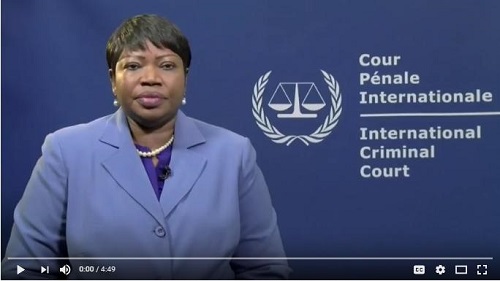
Statement of ICC Prosecutor on Opening Preliminary Investigations in the Philippines and in Venezuela

for his big hit because I am not sure love these guitars

The ICC is a long and uncertain road.  But this is an important first step for stopping the drug war killings, restoring rule of law, and seeking justice. We commend Ms. Bensouda for her leadership.

More soon, but in the meanwhile, an article in Rappler, and many more. Read about our own work on the Philippines here.


[Read More ...]

buy marijuana seeds


from Will Guitar and Weed Feed http://ift.tt/2BhYYts
via IFTTT